🌐English ▾
  • 🇬🇧 English
  • 🇨🇿 Čeština
  • 🇩🇪 Deutsch
  • 🇬🇷 Ελληνικά
  • 🇪🇸 Español
  • 🇫🇷 Français
  • 🇭🇺 Magyar
  • 🇮🇹 Italiano
  • 🇯🇵 日本語
  • 🇰🇷 한국어
  • 🇱🇹 Lietuvių
  • 🇳🇱 Nederlands
  • 🇵🇱 Polski
  • 🇵🇹 Português
  • 🇷🇺 Русский
  • 🇸🇰 Slovenčina
  • 🇹🇷 Türkçe
  • 🇨🇳 简体中文
  • 🇹🇼 繁體中文
Wawel Royal Castle Tickets · From €24
Tickets❧The hill❧The chambers❧Practical❧Questions
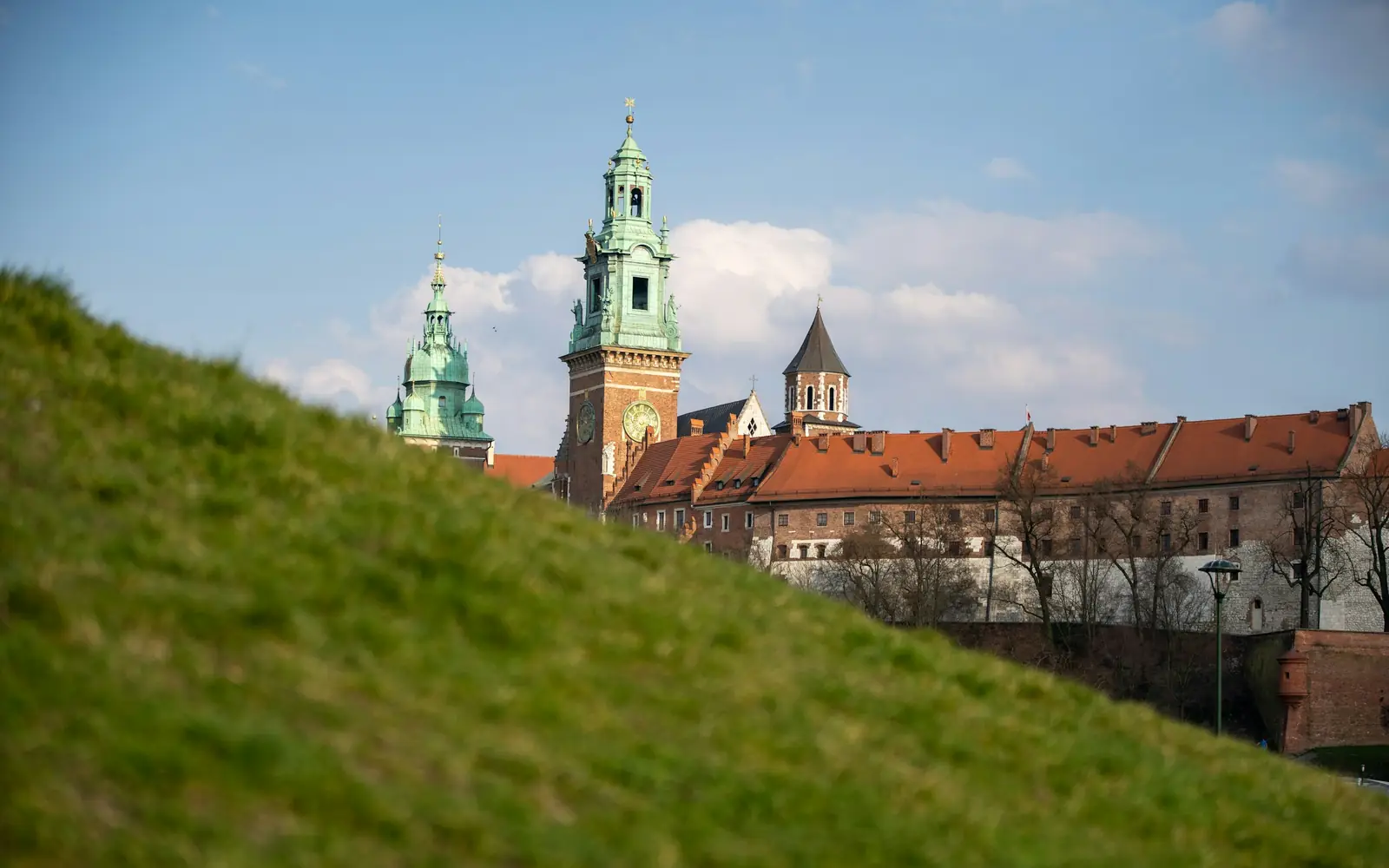
Wawel Royal Castle on its limestone hill above the Vistula river in Kraków — red-brick and white-stone towers, the cathedral's golden dome, and the Renaissance palace catching late-afternoon light. Poland.

Kraków · Wawel Hill · above the Vistula

The hill where Poland kept its kings, its crown jewels and its dragon

A Florentine palace on a Polish hill: an arcaded courtyard, a ceiling of carved heads, a coronation sword, and 137 tapestries that crossed an ocean to survive.

See ticket optionsFrom €24

The arcaded courtyard

Four routes, four bays, one hill

Wawel sells each exhibition as its own timed ticket. Pick the bay you want — most first-time visitors book the castle floors — and add the shorter routes if your afternoon allows.

Wawel releases timed slots only about a month ahead, with strict daily caps per exhibition — the State Rooms and Royal Private Apartments route sells out first, especially summer mornings and weekends.

Most booked

Castle: State Rooms + Royal Private Apartments

The full royal residence — both palace floors in one timed visit

€40per person

  • Timed entry to the castle's first and second floors — the State Rooms and the Royal Private Apartments
  • The Renaissance interiors of the Polish kings, hung with the surviving Sigismund Augustus tapestries from Brussels
  • The Deputies' Hall with its famous coffered ceiling of carved wooden heads
Reserve castle entry

Crown Treasury

Szczerbiec and the royal regalia — Poland's surviving crown treasures

€24per person

  • Timed entry to the Crown Treasury in the castle's Gothic chambers
  • Szczerbiec, the medieval coronation sword used to crown Polish kings from 1320 to 1764
  • Royal jewels, goldsmiths' work and ceremonial objects rebuilt into a collection since 1930
Reserve Treasury entry

The Armoury

Arms and armour of the Polish Crown — swords, plate and cannon

€24per person

  • Timed entry to the castle Armoury
  • Swords, plate armour, firearms and historic cannon from the military history of the Polish Crown
  • A compact exhibition that pairs naturally with the Crown Treasury
Reserve Armoury entry

Lost Wawel — the castle underground

Archaeology beneath the palace — the hill's oldest stones

€24per person

  • Timed entry to the Lost Wawel archaeological exhibition beneath the castle
  • The remains of the Rotunda of Sts. Felix and Adauctus, built around the turn of the 10th and 11th centuries
  • Excavated traces of medieval daily life — and scale models of the vanished buildings of the hill
Reserve Lost Wawel entry

The hill is free. The courtyards, the ramparts and the river views cost nothing. Tickets are for the interiors only, and Wawel Cathedral is a separate institution we do not sell.

Timed entry. Every route has a daily cap and an entry slot. You choose the date and time at checkout from what is actually open; slots release about a month ahead.

Delivered by email. Your timed PDF e-ticket arrives and is re-sent the day before your visit. Show it on your phone at the door.

Along the Vistula

Where Poland happened

Three bends of the river, three things worth knowing before you climb the ramp.

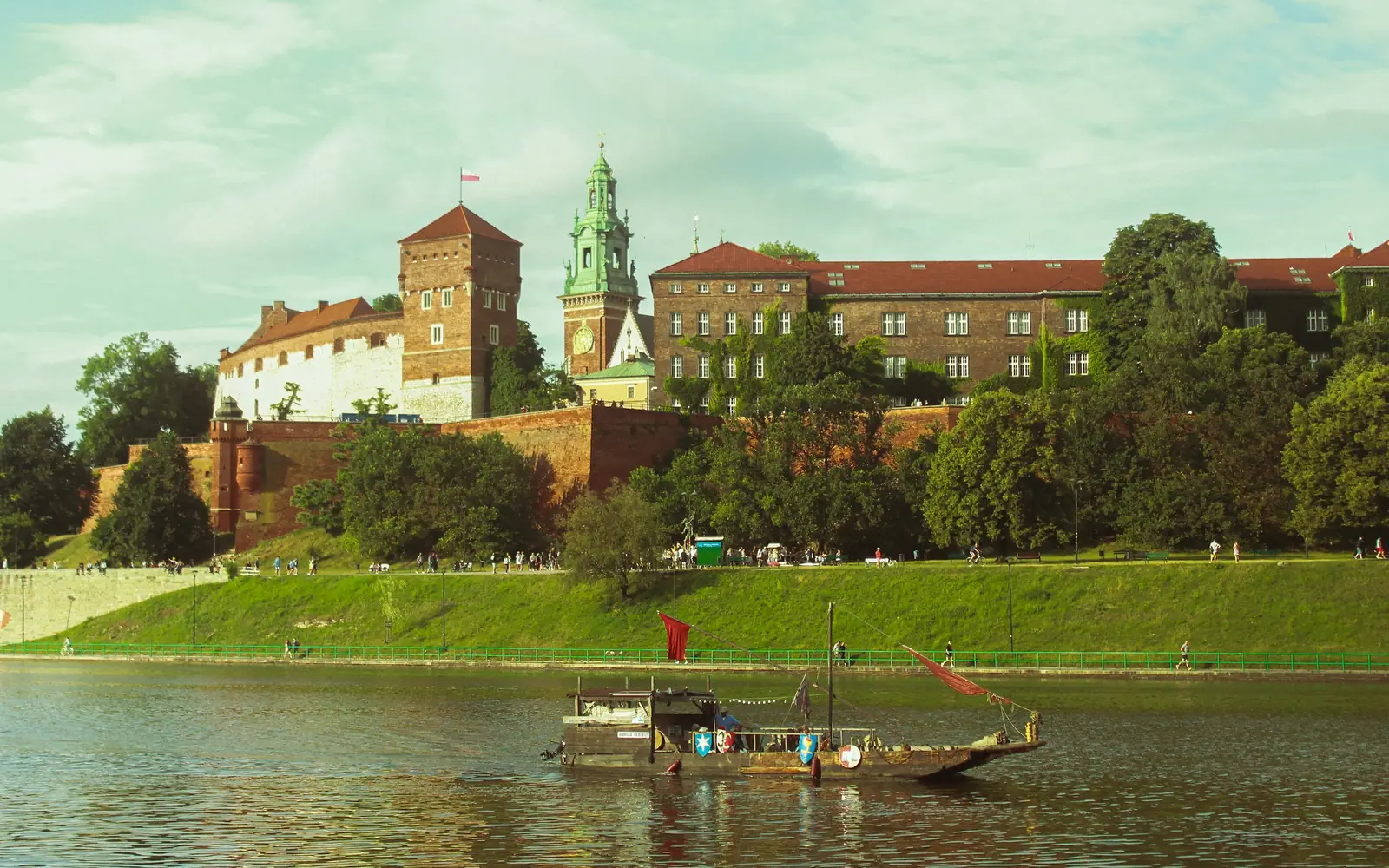
Wawel is where Poland happened. For more than five centuries the limestone hill above the Vistula was the seat of Polish monarchs — kings were crowned in the cathedral beside the palace, ruled from its halls, and were buried in its crypts — until Sigismund III moved the court to Warsaw in 1596. The castle that crowns the hill today is largely the Renaissance palace created for Sigismund I the Old between 1517 and 1536, when Italian masters — Francesco the Florentine, then Bartolomeo Berrecci — wrapped a vast tiered arcaded courtyard in the new style of Florence, decades before most of Europe north of the Alps had seen anything like it.

Wawel Royal Castle on its limestone hill above the Vistula, red-brick towers and the cathedral dome against the sky
The castle above the Vistula

Inside, the State Rooms and Royal Private Apartments hold the castle's two defining treasures: the Deputies' Hall, whose coffered ceiling stares back at you through dozens of carved wooden heads, and the Flemish tapestries commissioned in Brussels by Sigismund II Augustus in the mid-16th century — 137 survive of one of the largest single tapestry orders ever placed, looted by Russia in the 18th century, returned in 1921, evacuated to Canada through the Second World War and home again by 1961. In the Gothic chambers below, the Crown Treasury keeps Szczerbiec, the coronation sword of Polish kings from 1320 to 1764, and the Armoury its swords, plate and cannon.

A river boat on the Vistula passing beneath the walls of Wawel Hill
The river bend beneath the walls

The hill itself — the courtyards, the riverside walls, the views over Kraków — is free to walk, and we'll tell you that plainly. What needs a ticket, and what genuinely confuses visitors, is the interiors: Wawel sells each exhibition as a separate timed-entry ticket, released only about a month ahead, on a Polish-first, złoty-only booking system. That maze is what we untangle. You choose the experience in plain English, pay in euros (or your own currency), and your timed PDF e-ticket arrives by email, ready to scan at the door.

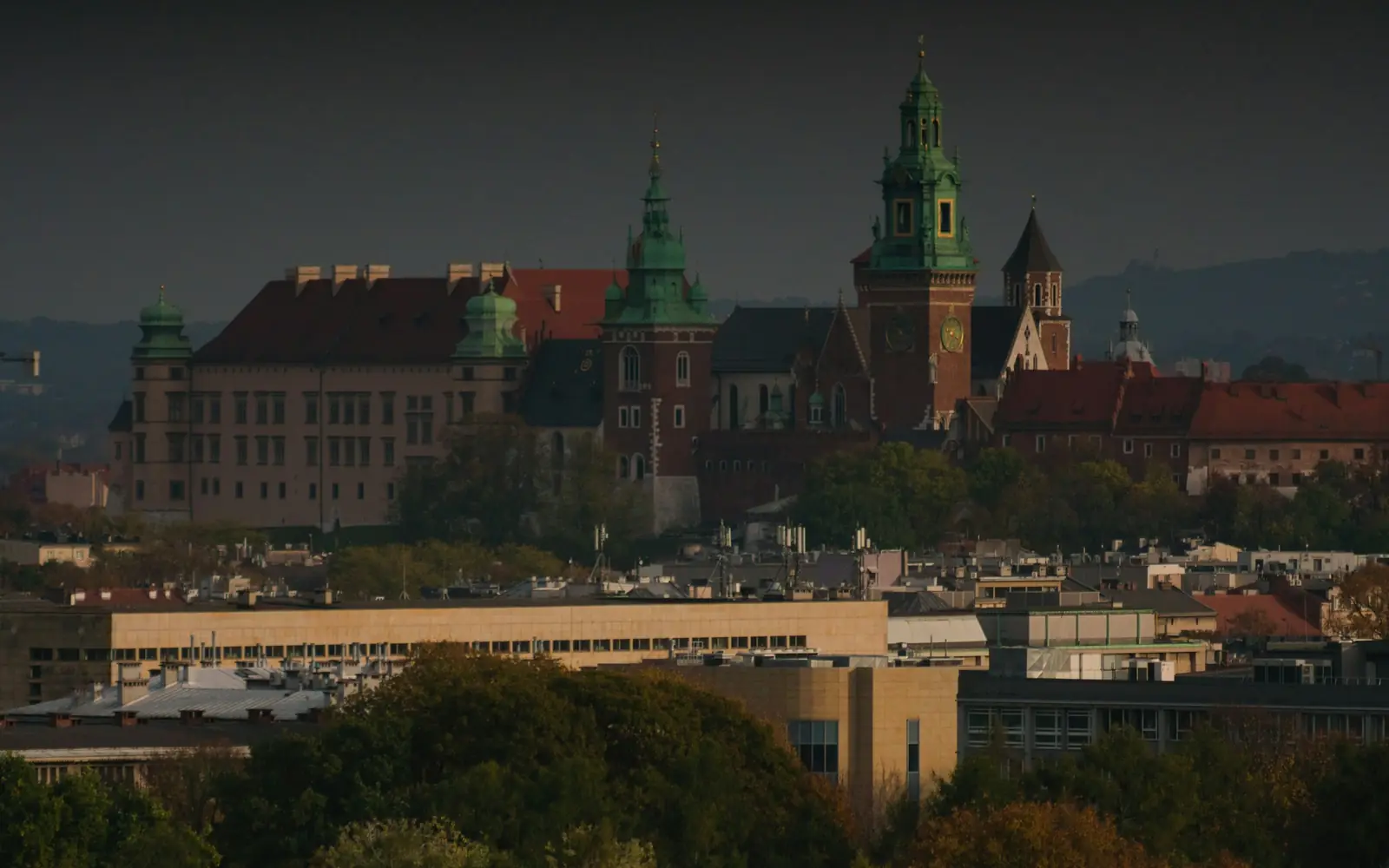
The Wawel skyline at dusk, towers and cathedral silhouetted over Kraków
Wawel at dusk
1596
Royal seat of Poland until the court moved to Warsaw
1517–1536
Rebuilt as a Renaissance palace for Sigismund I by Italian masters
137 tapestries
Survive from Sigismund II Augustus's great Brussels commission
UNESCO 1978
Kraków's Historic Centre — one of the first 12 World Heritage sites

The coffered ceiling

Ten chambers, opened one at a time

Everything we tell our own customers about the hill, its routes and its dragon. Open a coffer to read it.

IWhat is Wawel Royal Castle?

Wawel Royal Castle is the symbolic heart of Poland: a fortified complex crowning a limestone hill above the Vistula river at the southern edge of Kraków's Old Town. For more than five hundred years it was the seat of the Polish monarchy, the place where kings lived, ruled, were crowned in the cathedral alongside the palace, and were buried in its crypts. The castle reached its height under the last Jagiellonian kings in the sixteenth century and remained the formal royal residence until Sigismund III moved the court to Warsaw in 1596. Even after that move, monarchs returned to Wawel for their coronations and their tombs, and the hill never lost its standing as the repository of Polish nationhood.

The hill carries several institutions at once: the royal castle, the separate Wawel Cathedral, defensive walls, gates and gardens, all stacked above the river. Today the castle is a Polish state museum, and its interiors are divided into distinct exhibitions, each sold as a separate timed-entry ticket: the State Rooms and Royal Private Apartments across the palace's two main floors, the Crown Treasury in the Gothic chambers, the Armoury, and the Lost Wawel archaeological reserve beneath the buildings. The open hill, with its outer courtyards, its celebrated Renaissance arcaded courtyard, its ramparts and its river views, is free to walk during opening hours. That division between the free hill and the separately ticketed interiors, spread across several differently named routes, is the single most confusing feature of a Wawel visit, and the thing most worth grasping before you climb the ramp.

IIThe Renaissance courtyard and the Italian rebuilding

The palace standing on the hill today is the result of one of the boldest architectural decisions in Central European history. Sigismund I the Old had known the Italian Renaissance at first hand, and after a fire damaged the medieval castle he rebuilt it between 1517 and 1536 in the new style then barely seen north of the Alps. The work began under Francesco the Florentine and, after his death, continued under Bartolomeo Berrecci, with the local master Benedykt of Sandomierz also directing the building. Sigismund's Italian-born queen, Bona Sforza, drew further craftsmen from her homeland, turning Wawel into a true Renaissance palace. The centrepiece is the great tiered arcaded courtyard, three storeys of light, rhythmic arcades wrapping a vast central court.

Italian in inspiration, it carries distinctly Polish adaptations built for a northern climate and a royal purpose: a steep projecting roof to shed snow and rain, and an uppermost tier taller than those beneath it, a proportion unknown in Italy that lifts the eye to the piano nobile on the third floor and gives the courtyard its soaring, faintly dreamlike character. Standing in it, you are looking at the Renaissance arriving in Central Europe decades ahead of most of the continent. The courtyard is free to enter during opening hours, and it is where every ticketed exhibition begins, each route leading off from the arcades. Even the shortest visit to Wawel therefore delivers the castle's single greatest architectural sight at no cost. For visitors weighing which interiors to book, the courtyard is the fixed point around which the whole hill is organised, and the natural place to start planning the day.

IIIThe State Rooms and Royal Private Apartments

The castle's two main floors hold its flagship route and the treasures most visitors come to Wawel to see. The State Rooms are the ceremonial spaces of the monarchy, the audience halls, council chambers and long galleries hung with art. Their high point is the Deputies' Hall, also called the Ambassadors' Hall, whose coffered ceiling is set with carved wooden heads gazing down into the room: courtiers, townsfolk and characters of sixteenth-century Kraków, one of the most memorable ceilings in Europe and a highlight children remember as vividly as adults. The Royal Private Apartments complete the picture, the rooms where the kings and their households actually lived, furnished and hung to evoke the Jagiellonian court at its height. Through both floors run the Sigismund Augustus tapestries, the castle's single greatest treasure.

King Sigismund II Augustus commissioned the set from the workshops of Brussels in the mid-sixteenth century, woven to designs associated with Michiel Coxie, one of the largest single tapestry orders ever placed. 137 pieces survive today. Their survival is an epic in itself: looted by Russia in the eighteenth century, returned to Poland only in 1921 under the Treaty of Riga, evacuated through Romania and France to Canada when war came in 1939, and brought home between 1959 and 1961. Seeing them on the walls of the rooms they were woven for is the emotional centre of any visit. Our castle ticket covers both floors together in a single timed entry, so the ceremonial halls and the private apartments, and the tapestries running through them, are experienced as one continuous route, the way the palace was meant to be read.

IVThe Crown Treasury and the Armoury

The Crown Treasury occupies the Gothic chambers in the castle's oldest corner, and its centrepiece needs no embellishment: Szczerbiec, the jagged sword, carried at the coronations of Polish kings from 1320 to 1764. It is one of the very few pieces of the Polish crown regalia to survive, since Prussia seized and largely destroyed the rest in 1794, which makes the sword's quiet display case one of the most charged spots in the country. Around it, the Treasury has been rebuilt since 1930 through acquisitions and recovered royal objects: goldsmiths' work, jewels, orders and ceremonial pieces that summon the splendour of what was lost. A sixteenth-century child's armour made for Sigismund Augustus, returned from Budapest in 2021, is among the pieces that keep the collection growing.

The Armoury, displayed alongside, gathers the military face of the Polish Crown, the swords, plate armour, firearms and historic cannon drawn from centuries of the kingdom's wars. It is a compact exhibition and pairs naturally with the Treasury in a single sweep, the two together taking roughly an hour. For visitors deciding how to spend a second time slot after the State Rooms and Apartments, the Treasury-and-Armoury pairing is the classic choice: the coronation sword and the regalia connect directly to the throne rooms you have just walked, and the arms and armour set the whole royal story in its harder, defensive context. We book the two as separate timed slots on the same day and space them so you move from one to the other without a wait, closing the circle of the monarchy's story on the hill.

VLost Wawel — the castle underground

Beneath the palace lies the hill's deepest layer of history. The Lost Wawel exhibition, opened in its present form in 1975, is built around the excavated remains of the Rotunda of Sts Felix and Adauctus, also known as the Rotunda of the Blessed Virgin Mary, a small stone church raised around the turn of the tenth and eleventh centuries and rediscovered in the excavations of 1917 and 1918. Its curved walls, set directly on the limestone bedrock, rank among the oldest surviving stone structures in Poland, older than the kingdom's recorded coronations, older than almost everything standing above ground. Around the rotunda the exhibition assembles an archaeological and architectural reserve.

Excavated traces of everyday medieval life, the shoes, buckles, pots, tools and coins, sit beside architectural fragments gathered from across the hill's centuries, and a series of scale models reconstructs the vanished buildings of early Wawel. The route runs through former royal service buildings, including old kitchens and a coach house, so the walk itself becomes part of the story of how the hill was lived in and rebuilt over a thousand years. It is the most atmospheric and least crowded of the castle's exhibitions, and the right choice for visitors who want the origin story of the hill rather than its golden age. Families gain the most from it: in our experience children often rank the underground above the throne rooms, and it pairs perfectly with the dragon legend playing out at the foot of the same hill. We book it as its own timed slot, easily added to a castle-floors morning to fill an unhurried half-day.

VIThe Wawel dragon — legend, cave and fire-breathing statue

Every Polish child knows the story. Beneath Wawel Hill lived a dragon that terrorised Kraków, devouring livestock and townsfolk, until a clever cobbler stuffed a sheepskin with sulphur and left it out; the beast swallowed the bait, its insides caught fire, and it drank from the Vistula until it burst. The legend runs through the city's founding myths and appears in Polish chronicles as early as the twelfth century, in the writing of Wincenty Kadłubek. Best of all, it has a genuine address: the Dragon's Den, Smocza Jama, a real natural cave dissolved out of the hill's limestone, whose mouth opens at the foot of the castle walls beside the river. Walking down through the cave and out onto the riverbank is one of Kraków's small, perfect rituals.

At the exit stands the bronze Wawel Dragon statue, which sends a genuine burst of fire over the heads of delighted children at intervals, the most photographed dragon in Central Europe. The Den opens seasonally and carries its own simple entry arrangement on the hill, separate from the castle's exhibition tickets; ask us when you book and we will confirm the current setup for your dates. For families the practical pattern writes itself: take in the castle interiors first, then walk down through or past the Den, and end at the statue on the riverside boulevard, history first and fire-breathing finale. The dragon turns Wawel from a museum visit into an adventure a child will talk about for weeks, and it costs nothing to stand on the boulevard and wait for the flame.

VIIHow does ticketing work at Wawel?

Wawel's ticketing is the most confusing of any major Central European monument, and understanding the structure in advance transforms the visit. There is no single castle ticket. Each exhibition, the State Rooms and Royal Private Apartments, the Crown Treasury, the Armoury, Lost Wawel and a rotating cast of seasonal routes, is sold separately, each with its own timed-entry slot and its own daily visitor cap. The state museum's booking system releases those slots only about a month ahead, runs in Polish złoty, and presents a Polish-first interface. Tickets are issued as PDF e-tickets carrying a scannable code, shown at the entrance to each exhibition. Meanwhile the hill itself, the ramparts, the outer courtyards and the great arcaded courtyard, is free to walk, so only the interiors need a ticket at all.

One further point, disclosed plainly because visitors deserve to know it: on Mondays the castle opens selected exhibitions free of charge, on a seasonal rotation. Those free tickets are handed out only in person at the ticket office on the day, from a strictly limited pool, first-come first-served, and early queues and sell-outs are the norm. If your schedule is flexible and you are happy to gamble a morning in a line, it is a real option, and we say so openly. Our concierge service exists for the opposite need: a guaranteed timed slot for the exhibition you actually want, chosen in plain English, paid in euros or your own currency, with a real person to contact if plans change. We match you to the right route, hold your slot, and deliver the PDF to your inbox.
VIIIWhen is the best time to visit Wawel?

Kraków is one of Europe's most visited city-break destinations, and Wawel is its headline sight, so timing rewards planning. The peak months are June through August, when slots for the State Rooms and Apartments disappear within days of release and the hill is at its liveliest, with green gardens, full river boulevards, wonderful atmosphere and the hardest logistics. Late spring, from April to May, and early autumn, September and October, strike the best balance: mild weather, long-enough days, the courtyard photogenic in softer light, and noticeably better availability inside the booking window. These shoulder months are the ones to aim for.

Winter runs quiet, with short cold days but near-empty throne rooms and the tapestries seen in peace, and Kraków's Christmas market a ten-minute walk away on the Main Square. The weekly rhythm matters too. Weekdays beat weekends comfortably; Saturdays draw both tourists and Polish families, and Sunday mornings add churchgoers crossing the hill. Tuesday to Thursday are the calmest full-programme days, while Mondays bring the free-admission crowds and a reduced exhibition line-up. Within the day, the first slots after opening are the calmest, before the tour-group wave builds from mid-morning and peaks across the middle of the day. A first-slot castle entry, coffee in the courtyard, then a midday Treasury or Lost Wawel slot makes an unhurried, crowd-beating sequence. Above all, hold the structural rule in mind: slots are released only about a month before the visit date. Set your Kraków dates, then book Wawel as early inside that window as you can.

IXHow do you get to Wawel?

Wawel could hardly be easier to reach. The hill rises directly at the southern end of Kraków's Old Town, and the walk from the Main Market Square down Grodzka, or the quieter, prettier Kanonicza street, takes ten to fifteen minutes, delivering you to the foot of the ramp below the castle walls. Several tram lines stop near the base of the hill at the Wawel stop for anyone coming from further out. From Kraków Główny, the main railway station, it is a twenty to twenty-five minute walk straight through the Old Town, or a short tram or taxi ride. There is no visitor parking on the hill itself, so drivers should leave the car in a city car park and finish the journey on foot.

From Kraków Airport, around eleven kilometres west of the centre, the airport train reaches Kraków Główny in roughly twenty minutes, which makes a same-day arrival and visit entirely realistic. The final approach to the castle is a cobbled ramp climbing from the streets below to the hilltop gates, a short but genuine uphill walk. Allow fifteen to twenty minutes between reaching the foot of the hill and presenting your ticket at your exhibition entrance, more if you are travelling with children or arriving on a luggage day. The riverside boulevards beneath the hill, where the Dragon's Den exit and the fire-breathing statue stand, make the natural way down at the end of a visit. Climb the ramp to the courtyard for the exhibitions, then descend to the Vistula for the dragon, a route that turns the geography of the hill into the shape of the day.

XWhat about Wawel Cathedral?

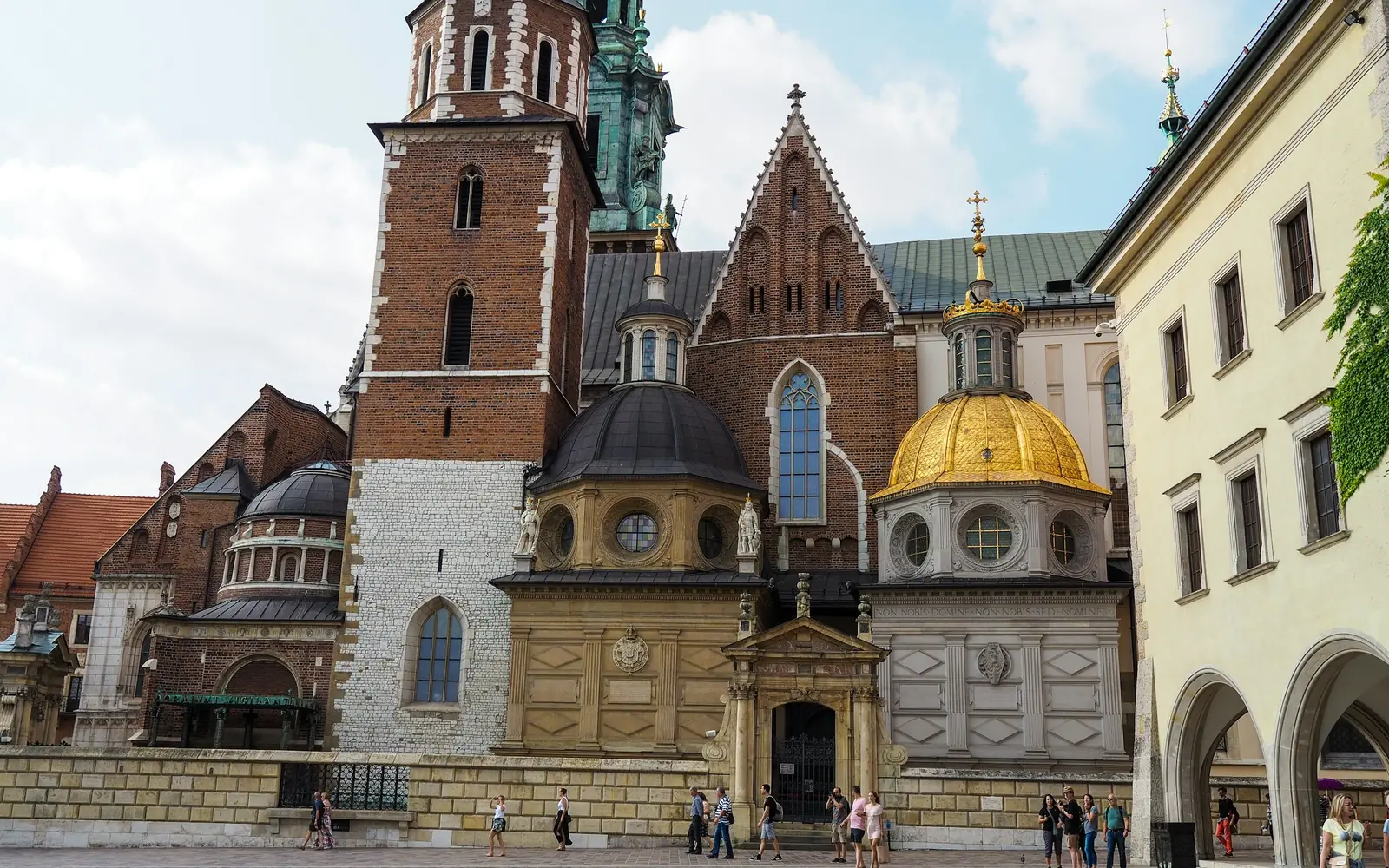
Sharing the hilltop with the castle stands Wawel Cathedral, the coronation church of the Polish monarchy and the burial place of its kings, national heroes and poets. Monarchs were crowned here before the high altar from 1320 to the final coronation in 1764, and the cathedral has served as the royal necropolis since the fourteenth century, a national pantheon that also holds Tadeusz Kościuszko and the poet Adam Mickiewicz. Its Renaissance jewel is the Sigismund Chapel, built between 1517 and 1533 by Bartolomeo Berrecci for Sigismund I and long regarded as the purest example of Renaissance architecture outside Italy, its gilded dome unmistakable from the hill. In the tower above hangs the great Sigismund Bell, cast in 1521, a bronze of nearly thirteen tonnes rung only for occasions of national importance.

Visitors often assume the cathedral is part of the castle. It is not. The cathedral is run by a separate church institution with its own entry arrangements and its own tickets, entirely independent of the castle's state museum. No castle ticket, ours or the operator's, includes it. That changes the plan rather than the possibility. The cathedral entrance sits a few steps from the castle courtyard, and adding it on the day is straightforward for most visits. Our service covers the castle's interiors, and we would rather tell you plainly what we do not sell than let you discover it at the door. If the royal tombs, the Sigismund Chapel and the bell tower matter to your visit, set aside roughly an extra hour on the hill and check the cathedral's own current arrangements before you travel.

  • Book in your languageYour currency, the final price — no złoty, no Polish form
  • Pro tips includedWhich route to pick, the carved heads most walk under, the quiet hours
  • Ready before you flyTimed mobile ticket waiting in your inbox
  • 24/7 human supportReal people in your own language, any hour, right up to the castle door

Hung on the walls

Inside and around the castle

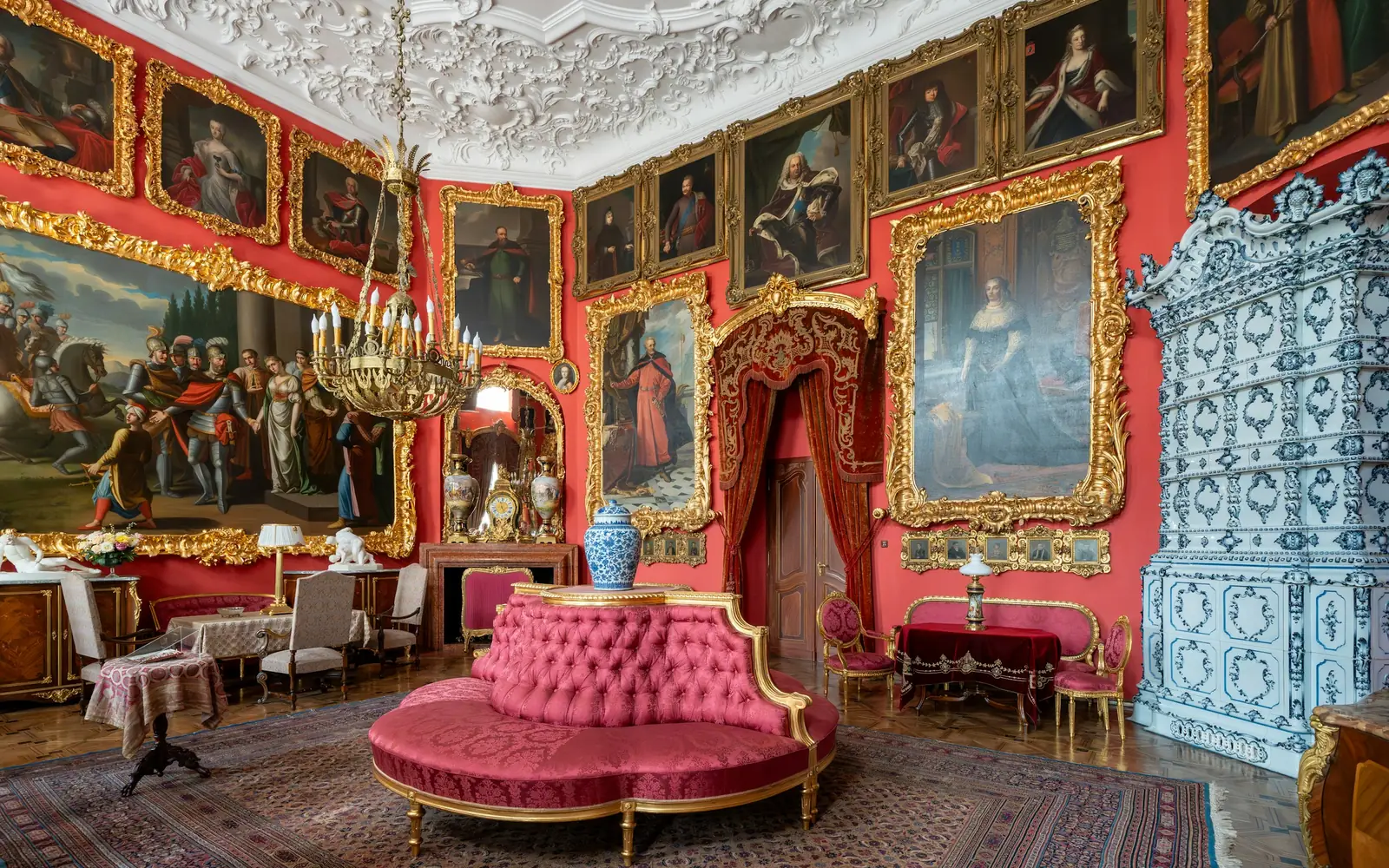
A richly painted room of the Royal Private Apartments at Wawel hung with paintings
The Royal Private Apartments
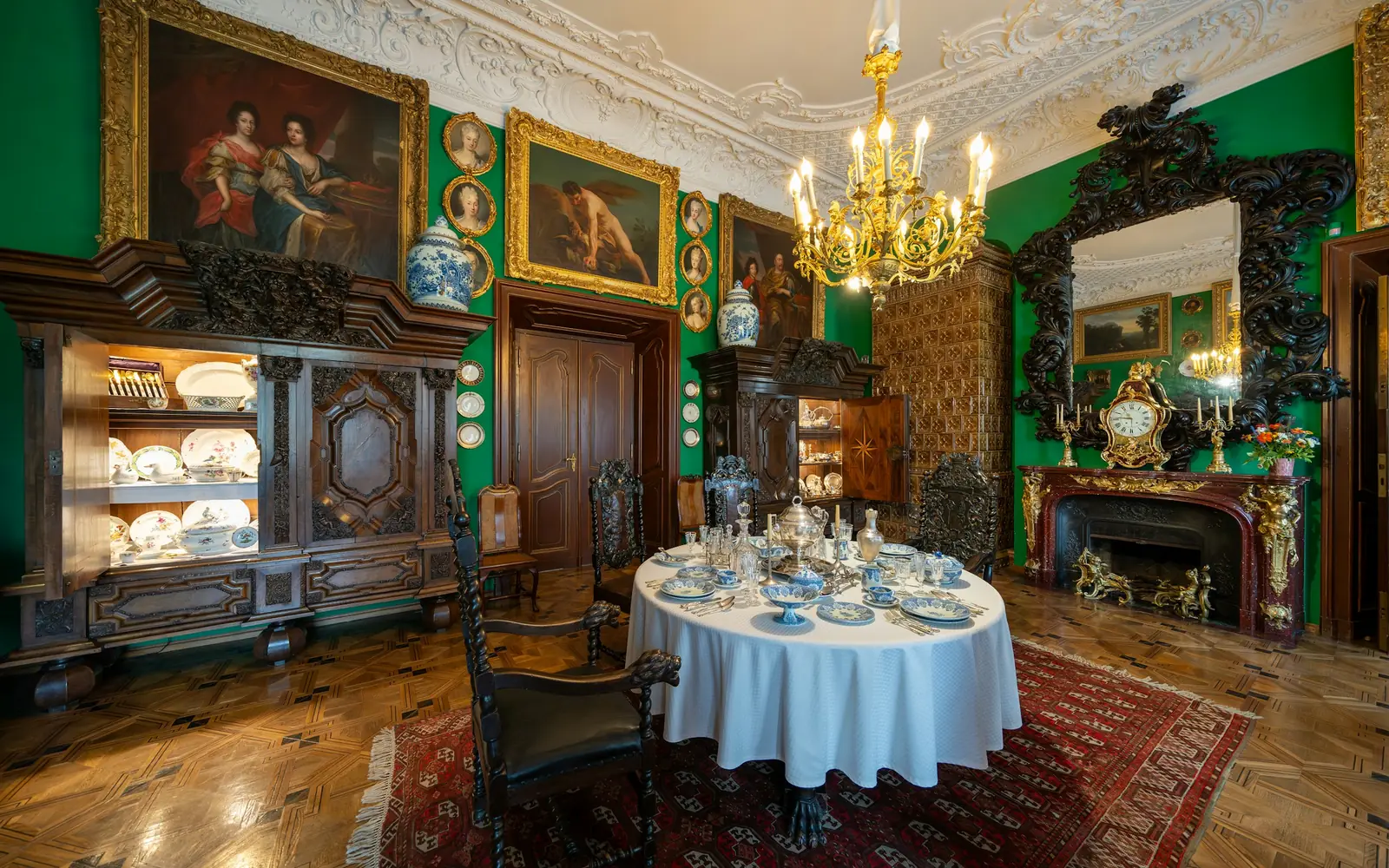
A dining room inside Wawel Castle with green walls, a chandelier and a laid table
A dining room in the State Rooms
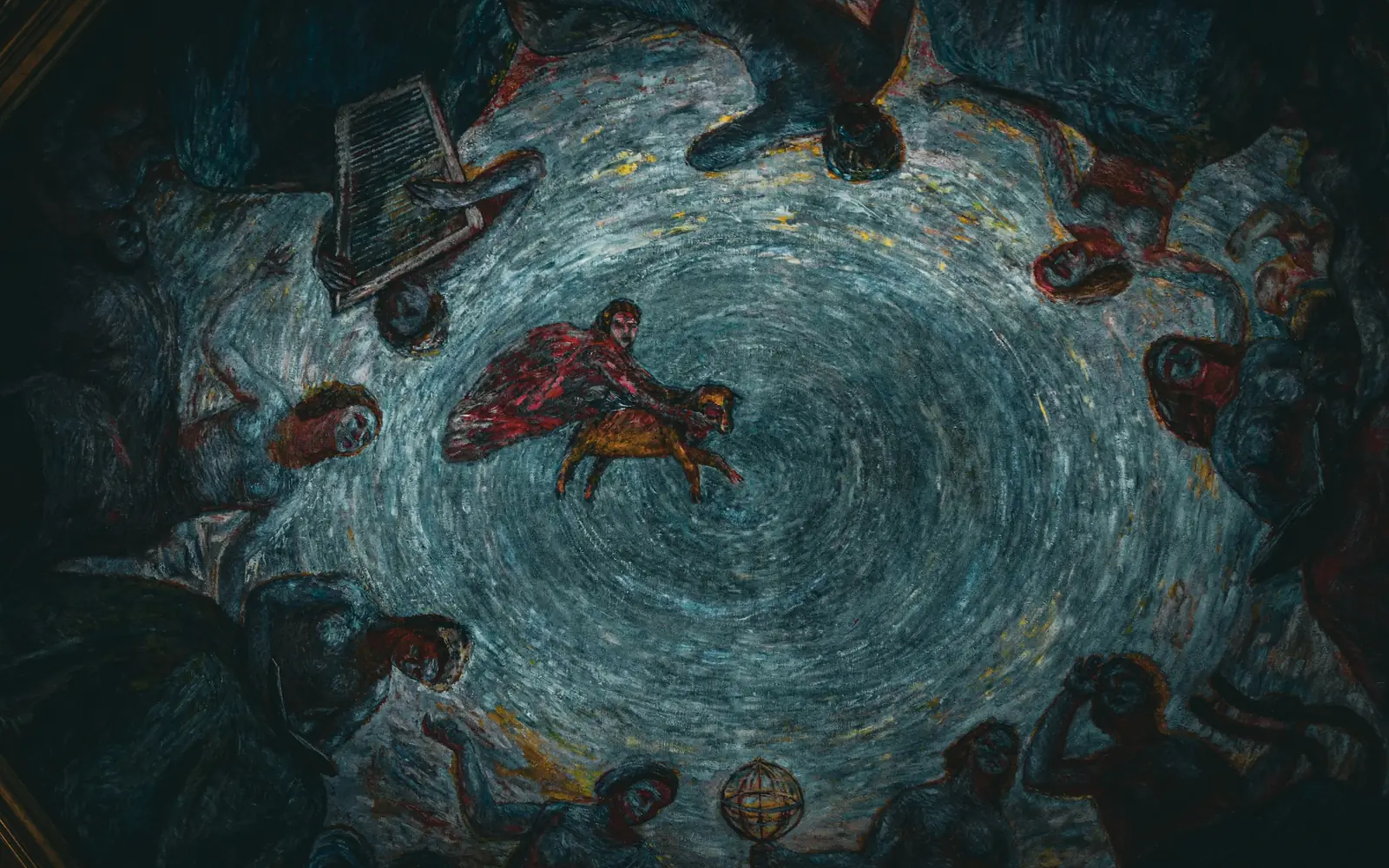
A painted ceiling inside Wawel Castle
A painted ceiling
The golden domes and chapels of Wawel Cathedral beside the castle
Wawel Cathedral, a separate ticket
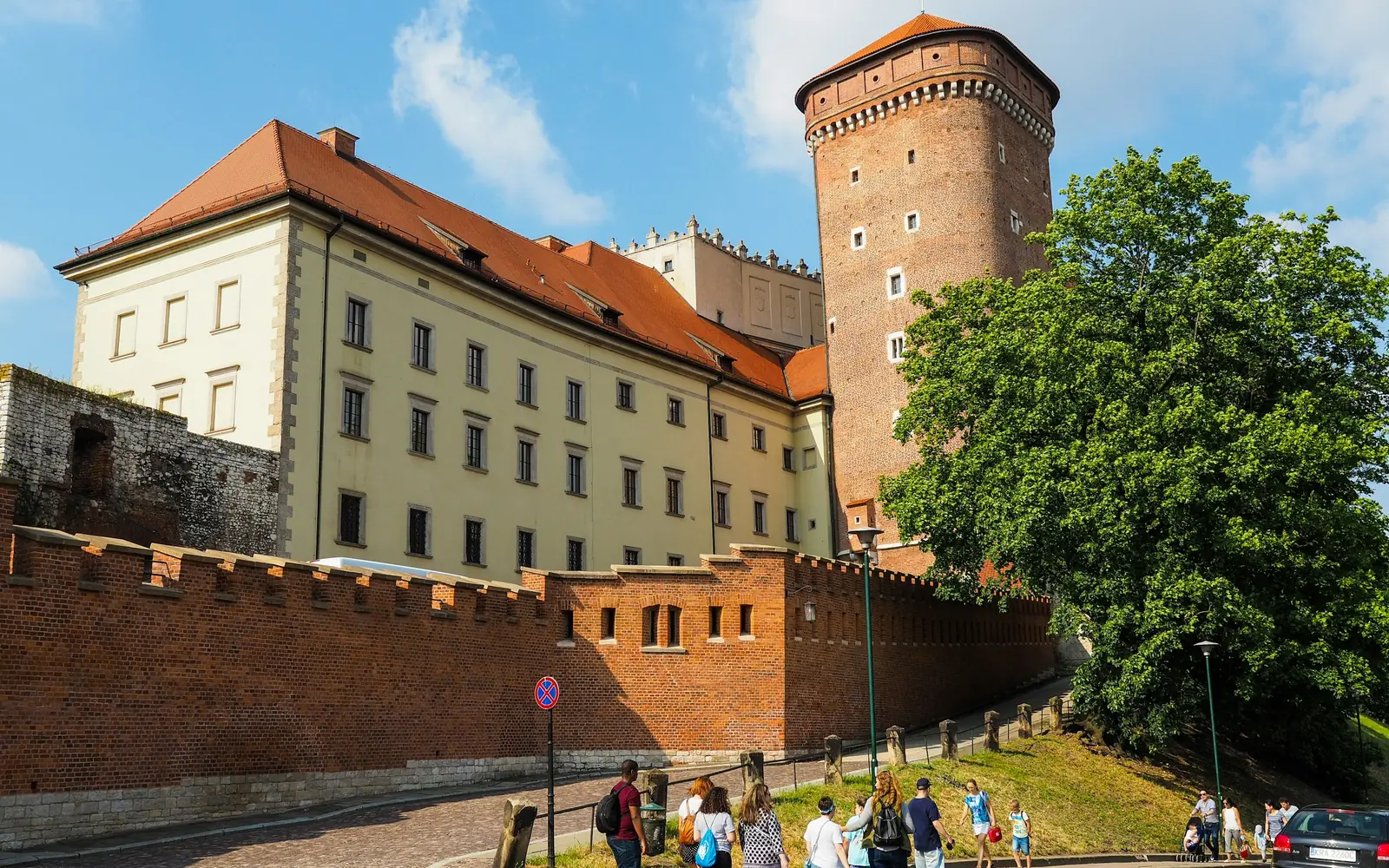
The Sandomierska tower and the outer walls of Wawel with visitors walking below
The Sandomierska tower

Treasury inventory

Hours, distances and what to expect

The practical entries, numbered like the keeper of the treasury would.

IOpening hoursExhibitions are typically open Tuesday to Sunday from about 09:00 to 17:00, and Mondays on a shorter free-admission programme from about 10:00 to 16:00. Hours vary by season and by exhibition, and last entry is before closing — we confirm your exact slot on your ticket.
IIAddressWawel Royal Castle, Wawel 5, 31-001 Kraków, Poland
IIIGetting thereWawel Hill rises at the southern end of Kraków's Old Town — about a 10–15 minute walk from the Main Market Square along Grodzka or Kanonicza street. Several tram lines stop near the foot of the hill (Wawel stop).
IVGetting there from the airportKraków Airport (KRK) is about 11 km west of the city. The airport train reaches Kraków Główny (main station) in roughly 20 minutes; from there it is a 20–25 minute walk or a short tram or taxi ride to Wawel.
VTime neededAllow 60–90 minutes for the State Rooms + Royal Private Apartments route, and 30–45 minutes each for the Crown Treasury, the Armoury and Lost Wawel. With the free courtyards and ramparts, a half-day covers the hill comfortably.
VIAccessibilityThe hill is reached by a cobbled ramp and the historic interiors involve stairs and uneven floors; some routes are easier than others. Contact us before booking if mobility is a concern and we will confirm the current arrangements with the castle for your chosen exhibition.
VIIPhotographyPhotography for personal use is permitted in the exhibitions without flash or a tripod. A few specific rooms or temporary exhibitions may restrict it, so watch for the signs as you go.
VIIIFoodCafés operate on the hill itself, and the streets below — Kanonicza, Grodzka and the riverside boulevards — are lined with restaurants. The Kazimierz district, a 10-minute walk south-east, is Kraków's best eating quarter.

The carved heads

Four things booking with us changes

What the heads in the Deputies’ Hall would tell you about the day.

I

Book in your language

Your currency, final price.

II

Pro tips included

Best times, secret spots, the room most miss.

III

Ready before you fly

Mobile ticket, ready in your inbox.

IV

24/7 human support

Real people, any hour, any time zone — 24/7, in your own language, right through to your visit day.

Your five-minute guide

Your Wawel 5-minute guide

Hand-written, narrated by a heritage host, sent to every customer the day before their visit. Five minutes that turns a hill of separate exhibitions into one story — the kings, the sword, the tapestries that crossed an ocean to survive, and the dragon under the floor.

  • Why a Renaissance palace from Florence stands on a Polish hill — Sigismund I, Bona Sforza and Berrecci's courtyard
  • The Deputies' Hall ceiling: who the carved wooden heads are looking at
  • Szczerbiec and the tapestries — how Poland's treasures survived partition, looting and war
  • The dragon legend, the real cave, and where the statue breathes fire
Included free with every ticket. No app, no download — plays in any browser.

The crypts

Guides for a longer read

Written for this hill only.

Niche I · 4 min read

The Best Time to Visit Wawel Royal Castle

  1. Month-by-Month on the Hill
  2. The Weekly Rhythm — and the Free-Monday Trade-off
  3. Best Time of Day and Slot Strategy
Open the guide →
Niche II · 4 min read

How to Get to Wawel Royal Castle

  1. On Foot from the Old Town
  2. By Tram and Around the City
  3. From Kraków Główny Station and the Airport
Open the guide →
Niche III · 4 min read

What to See Inside Wawel Royal Castle

  1. State Rooms + Royal Private Apartments — the Flagship Route
  2. The Crown Treasury — Szczerbiec and the Regalia
  3. The Armoury and the Military Hill
Open the guide →
Niche IV · 4 min read

Wawel Castle vs Wawel Cathedral — Two Tickets, One Hill

  1. What the Castle Is — and What It Holds
  2. What the Cathedral Is — and What It Holds
  3. Planning Both in One Visit
Open the guide →
Niche V · 4 min read

Visiting Wawel Castle with Kids

  1. Start with the Dragon — the Story That Carries the Day
  2. Which Exhibitions Work for Children
  3. Pacing, Slots and Refuelling
Open the guide →

The council table

Questions, answered around the table

Every question we have been asked about tickets, routes, the cathedral and the free Monday.

Which Wawel ticket should I book?

If you book one thing, book the Castle (State Rooms + Royal Private Apartments) — both palace floors, the Sigismund Augustus tapestries and the carved-heads ceiling in one timed visit. The Crown Treasury (Szczerbiec and the regalia), the Armoury and Lost Wawel (the archaeology under the palace) are separate, shorter exhibitions you can add. We decode the whole menu so you only book what you'll actually use.

What's the difference between the State Rooms and the Royal Private Apartments?

They are the two floors of the royal residence. The State Rooms are the ceremonial halls — including the Deputies' Hall with its ceiling of carved wooden heads — and the Royal Private Apartments are the monarchs' living quarters, hung with Flemish tapestries. Our castle ticket covers both floors together in one timed entry.

Is Wawel Hill free to enter?

Yes — and we'll say so plainly. The hill, the courtyards (including the Renaissance arcaded courtyard) and the views over the Vistula are free to walk during opening hours. What requires a ticket is the interiors: the State Rooms and Apartments, the Crown Treasury, the Armoury and the underground exhibitions. Our service is for those interiors.

Is Wawel Cathedral included in these tickets?

No. The cathedral — where Polish kings were crowned and buried, with the Sigismund Bell in its tower — stands beside the castle but is run by a separate church operator with its own tickets. We don't sell it, but it's right next door and easy to add to your visit on the day.

Are the tickets for a specific time slot?

Yes. Wawel's exhibitions are timed-entry with daily visitor caps. You choose a date and entry time at checkout, and your ticket is valid for that slot. Arrive on the hill 15–20 minutes early — it's a short uphill walk from the gates to the courtyard entrances.

How far in advance should I book Wawel tickets?

The operator releases timed slots only about a month ahead, so very early booking isn't possible — but within that window the popular slots go fast. The State Rooms + Apartments route sells out first, especially summer mornings and weekends. Book as soon as your Kraków dates are fixed.

Is there a free day at Wawel Castle?

Yes, and we'd rather you hear it from us: on Mondays the castle opens selected exhibitions free of charge (the selection changes by season). The catch is that free tickets are issued only in person at the ticket office on the day, from a limited pool, first-come-first-served — queues form early and selling out is normal. If your schedule is flexible and you're happy to queue, it's a genuine option. Our service is for guaranteed, pre-booked timed entry on the day you choose.

How do I receive my ticket?

As a PDF e-ticket by email, with a scannable code. Show it on your phone at the entrance to your exhibition — no printing or collection needed. We also send a 5-minute audio history of the castle the day before your visit.

How long does each exhibition take?

The State Rooms + Royal Private Apartments route takes 60–90 minutes. The Crown Treasury, the Armoury and Lost Wawel take roughly 30–45 minutes each. Pairing the castle floors with one smaller exhibition makes an unhurried half-day, with time for the free courtyards and ramparts.

What are the Sigismund Augustus tapestries?

A vast set of Flemish tapestries commissioned from Brussels workshops by King Sigismund II Augustus in the mid-16th century — one of the largest single tapestry orders ever placed. 137 survive, after a history that includes looting by Russia, return to Poland in 1921 under the Treaty of Riga, wartime evacuation to Canada, and homecoming by 1961. They hang in the State Rooms and Apartments.

What is Szczerbiec?

The coronation sword of the Polish kings — used at coronations from 1320 to 1764 and one of the very few pieces of the royal regalia to survive the Prussian seizure of 1794. It is the centrepiece of the Crown Treasury, displayed in the castle's Gothic chambers.

What is Lost Wawel?

The archaeological exhibition beneath the castle, built around the remains of the Rotunda of Sts. Felix and Adauctus from around the turn of the 10th and 11th centuries — among the oldest stone buildings in Poland. Excavated objects of medieval daily life and scale models reconstruct the vanished buildings of the hill.

Can I see the Wawel dragon's den?

The Dragon's Den (Smocza Jama) is a natural limestone cave in the side of the hill, tied to Kraków's founding legend of the Wawel dragon; its exit leads to the riverside, beside the famous fire-breathing dragon statue. It opens seasonally with its own simple entry arrangement on the hill — ask us when you book and we'll tell you the current setup for your dates.

Why book through you rather than directly?

Three honest reasons: the operator's booking system runs in złoty only, Wawel's many separate exhibition tickets genuinely confuse first-time visitors, and there's no support in your own language if something goes wrong. We match you to the right exhibition, charge cleanly in euros or your own currency, and a real human answers in English (and 11 other languages) before, during and after your visit.

Can we change our time slot?

Timed tickets are issued for a fixed slot, and the operator's change rules are restrictive — so tell us your plans carefully before we book. If your plans shift, reply to your confirmation email as early as possible and our concierge team will tell you honestly what can and can't be done.

Is Wawel suitable for children and visitors with limited mobility?

Children love Wawel — the dragon legend, the underground, the armour. For limited mobility, be aware the hill is reached by a cobbled ramp and the historic interiors involve stairs; some routes are easier than others. Contact us before booking and we'll confirm the current accessible arrangements for your chosen exhibition.

What is Wawel Royal Castle?

Wawel Royal Castle stands on a limestone hill above the Vistula river at the southern edge of Kraków's Old Town in Poland. For more than five centuries it was the residence of the Polish monarchy, where kings ruled and were crowned, until the court moved to Warsaw under Sigismund III in 1596. The palace seen today is largely the Renaissance residence rebuilt for Sigismund I the Old between 1517 and 1536 by Italian masters, Francesco the Florentine and Bartolomeo Berrecci, arranged around a celebrated tiered arcaded courtyard. Now a state museum, its interiors are shown as separate exhibitions: the State Rooms, the Royal Private Apartments, the Crown Treasury holding the Szczerbiec coronation sword, the Armoury, and the Lost Wawel archaeological reserve. The neighbouring Wawel Cathedral, with its Sigismund Bell, is a separate institution. The hill is also tied to the legend of the Wawel dragon, and Kraków's Historic Centre was inscribed by UNESCO in 1978.

How do I get to Wawel Royal Castle?

Wawel Royal Castle rises at the southern end of Kraków's Old Town, an easy walk from the city's main sights. From the Main Market Square, the stroll down Grodzka or the quieter Kanonicza street takes about ten to fifteen minutes and brings you to the foot of the ramp below the castle walls. Several tram lines stop nearby at the Wawel stop for those arriving from further out. From Kraków Główny, the main railway station, it is a twenty to twenty-five minute walk straight through the Old Town, or a short tram or taxi ride. From Kraków Airport, around eleven kilometres west of the centre, the airport train reaches Kraków Główny in roughly twenty minutes, making a same-day arrival and visit realistic. There is no visitor parking on the hill itself, so drivers should use the city car parks and walk. The final approach is a cobbled ramp climbing to the hilltop gates, so allow extra time on foot.

What is there to see at Wawel Royal Castle?

Wawel Royal Castle divides its interiors into separate timed-entry exhibitions. The flagship is the State Rooms and Royal Private Apartments across the palace's two main floors, home to the Deputies' Hall with its coffered ceiling of carved wooden heads and the surviving Sigismund Augustus tapestries, 137 Flemish pieces woven in Brussels in the sixteenth century. The Crown Treasury, in the castle's Gothic chambers, displays Szczerbiec, the coronation sword of Polish kings used from 1320 to 1764. The Armoury gathers swords, plate armour, firearms and cannon of the Polish Crown, and Lost Wawel presents the archaeology beneath the palace, built around a rotunda from around the year 1000. The tiered Renaissance arcaded courtyard, the ramparts and the river views are free to walk. Beside the castle stand Wawel Cathedral, with its Sigismund Chapel and Sigismund Bell, and the Dragon's Den cave with its fire-breathing statue on the riverbank below.

Is Wawel Royal Castle worth visiting?

Wawel Royal Castle is Kraków's headline sight and one of the most significant places in Poland, so it earns its place on any itinerary. This is where the Polish monarchy lived, ruled, was crowned and was buried for over five centuries, and the Renaissance palace built for Sigismund I is among the finest of its era north of the Alps. Its arcaded courtyard alone rewards the climb, and it is free to enter. Inside, the Sigismund Augustus tapestries and the Deputies' Hall ceiling of carved heads are genuine masterpieces, while the Crown Treasury holds Szczerbiec, the coronation sword of Poland's kings. Families gain the legend of the Wawel dragon and the fire-breathing statue by the river. The hill also carries Wawel Cathedral and forms part of a UNESCO World Heritage site. Few European castles combine architecture, treasure, archaeology and living legend so completely in one place.

How long do you need at Wawel Royal Castle?

Plan half a day for Wawel Royal Castle to see it without rushing. The flagship State Rooms and Royal Private Apartments route takes sixty to ninety minutes, and each of the smaller exhibitions, the Crown Treasury, the Armoury and Lost Wawel, takes roughly thirty to forty-five minutes. A satisfying visit pairs the castle floors with one smaller exhibition, adds the free arcaded courtyard and ramparts, and finishes at the Dragon's Den and the fire-breathing statue by the river. Because each exhibition is a separate timed-entry ticket with its own slot, spacing two slots about two hours apart leaves room for coffee in the courtyard between them without dead time. Add roughly fifteen to twenty minutes for the cobbled ramp up to the gates, and another hour if you also want the neighbouring Wawel Cathedral. Determined visitors see one exhibition in a focused ninety-minute window; most enjoy a relaxed half-day.

When is the best time to visit Wawel Royal Castle?

The best time to visit Wawel Royal Castle is late spring, April to May, or early autumn, September to October, when Kraków enjoys mild weather, long days and far better ticket availability than high summer. June to August is the peak, when slots for the State Rooms and Royal Private Apartments sell out within days of release; winter weekdays are quietest of all, with near-empty throne rooms. Within the week, Tuesday to Thursday beat the weekend, and Mondays run a reduced free-admission programme with long in-person queues. Within the day, the first slots after opening are the calmest, before the tour-group wave builds through the middle of the day. One rule overrides the rest: Wawel releases timed slots only about a month before the visit date, so book the moment your Kraków dates fall inside that window, since the flagship castle route disappears first.

Is there one ticket that covers all of Wawel?

No — and this is the single most misunderstood thing about Wawel. Each exhibition (State Rooms + Royal Private Apartments, Crown Treasury, Armoury, Lost Wawel and seasonal routes) is sold separately with its own timed slot and daily cap. The hill and courtyards are free. We help you pick only the exhibitions you'll actually use.

Which exhibition is the must-see?

The State Rooms + Royal Private Apartments — both palace floors, the 137 surviving Sigismund Augustus tapestries and the Deputies' Hall ceiling of carved heads. If you add one more, the Crown Treasury (with the Szczerbiec coronation sword) is the classic pairing.

How far ahead can I book?

Only about a month — the operator releases timed slots roughly a month before the visit date. Within that window the State Rooms route sells out first, especially summer mornings and weekends, so book as soon as your dates fall inside it.

Is Wawel free on Mondays?

Selected exhibitions open free on Mondays on a seasonal rotation — but free tickets are issued only in person at the ticket office on the day, from a limited first-come-first-served pool, and queues form early. It's a genuine option if you're flexible; our service is for guaranteed pre-booked entry.

Is the famous courtyard included in my ticket?

Better — it's free. The Renaissance arcaded courtyard, the outer courtyards, the ramparts and the river views are open without any ticket during opening hours. Tickets are needed only for the interior exhibitions, all of which are entered from the courtyard.

Is Wawel Cathedral part of the castle ticket?

No. The cathedral — coronation church and royal burial place — is run by a separate church operator with its own tickets. It stands beside the castle, so adding it on the day is easy, but no castle ticket includes it.

How long do I need on Wawel Hill?

Allow 60–90 minutes for the State Rooms + Apartments, 30–45 minutes for each smaller exhibition, plus time for the free courtyard and ramparts. The castle floors plus one smaller exhibition and the dragon statue makes a comfortable half-day.

What happened to the Polish crown jewels?

Most of the historic Crown Treasury was seized by Prussia in 1794 and largely destroyed. Szczerbiec, the coronation sword used from 1320 to 1764, is the great survivor, and since 1930 the Treasury has been rebuilt around it through acquisitions and recovered royal objects.

Can I visit the Dragon's Den?

Yes, seasonally — Smocza Jama is a natural limestone cave in the hillside tied to the dragon legend, with its exit by the river next to the fire-breathing dragon statue. It has its own simple entry arrangement separate from the exhibition tickets; ask us for the current setup for your dates.

Is the castle visit accessible for limited mobility?

Partly. The hill is climbed via a cobbled ramp and the historic interiors involve stairs and uneven floors; some exhibitions are easier than others. Contact us before booking and we'll confirm the castle's current accessible arrangements for your chosen route.

Foundation stone

The keeper's note

Wawel Castle Tickets acts as a facilitator to help international visitors purchase timed-entry tickets for Wawel Royal Castle, which is managed as a Polish state museum. We do not resell tickets — we provide a personalised booking and support service in your own language.

One payment in your own currency; the fee is already in the figure you see. We then hold your dated slot with the castle, send the PDF, and answer in your language until the moment you walk under the arcades.

Sources: whc.unesco.org, en.wikipedia.org Page reviewed: June 12, 2026
—
—
♛Reserve castle entryFrom €24

Tickets · The hill · The chambers · Practical · Questions · Guides · Contact us

Privacy policy · Terms of service · Refund policy · Cookie policy · bookings@wawelroyalcastle.com

EnglishČeštinaDeutschΕλληνικάEspañolFrançaisMagyarItaliano日本語한국어LietuviųNederlandsPolskiPortuguêsРусскийSlovenčinaTürkçe简体中文繁體中文

Independent booking service for international visitors to Wawel Royal Castle. © 2026 WAWEL TICKET CONCIERGE. All rights reserved. Photographs by Dariusz Kanclerz, Eldar Nazarov, Jan Ryszka, Kateryna Berdnikova, Michał Lis, Nathan Lilly, Sebastian Kurpiel and Tomasz Zielonka.